
Jewelry Inventory Reorder Planning for Retailers: A Wholesale Guide
A practical wholesale jewelry inventory guide for using sell-through, weeks of supply, lead time, and SKU roles to plan reorders across tennis jewelry, chains, and 925 silver moissanite.
Quick answer: A practical jewelry reorder plan combines four inputs: recent unit sales, on-hand inventory, supplier lead time, and each SKU’s role in the assortment. Retailers should not replenish every item at the same rate. Protect availability on proven core styles, test seasonal and fashion items in controlled depth, and review premium pieces individually.
For U.S. jewelers, boutiques, bridal stores, online retailers, distributors, and resellers, the goal is not to own the largest inventory. The goal is to keep the right items available while limiting cash tied up in slow-moving variations. This guide explains a repeatable jewelry inventory reorder planning process for tennis bracelets and necklaces, 925 sterling silver chains, 10K/14K/18K gold chains, and 925 silver moissanite jewelry.
Why Reorder Planning Matters Before the Holiday Demand Curve
Search demand for jewelry gifts and tennis bracelets has historically risen as the U.S. holiday season approaches. A five-year U.S. comparison in Google Trends shows a recurring lift beginning in November, with tennis-bracelet interest often strengthening through December. That means retailers need product pages, merchandising, and replenishment rules ready before shoppers enter the market.
Industry conditions also reward disciplined buying. The National Retail Federation reported an early 2026 import peak as retailers moved merchandise ahead of tariff and supply-chain uncertainty. Meanwhile, JCK’s second-half outlook emphasized calculated merchandising, strong basics, and cautious inventory decisions in a split consumer market. A reorder system helps translate that uncertainty into specific actions instead of broad guesses.
If you need the larger seasonal schedule first, review LEKANI’s 2026–2027 wholesale jewelry holiday planning calendar. Use the calendar to decide when to prepare, then use this guide to decide what and how much to reorder.
Start With Four Numbers for Every Reorder Review
A useful reorder review can begin with four numbers. These do not replace judgment, but they make the decision visible and repeatable.
- Units sold during the review period: Use a consistent period, such as the last four or eight weeks.
- Current sellable units on hand: Exclude damaged, returned, reserved, or incomplete units.
- Expected supplier lead time: Count ordering, processing, transit, receiving, inspection, and product-page preparation.
- SKU role: Label the item as core, traffic-driving, seasonal, test, premium, or special order.
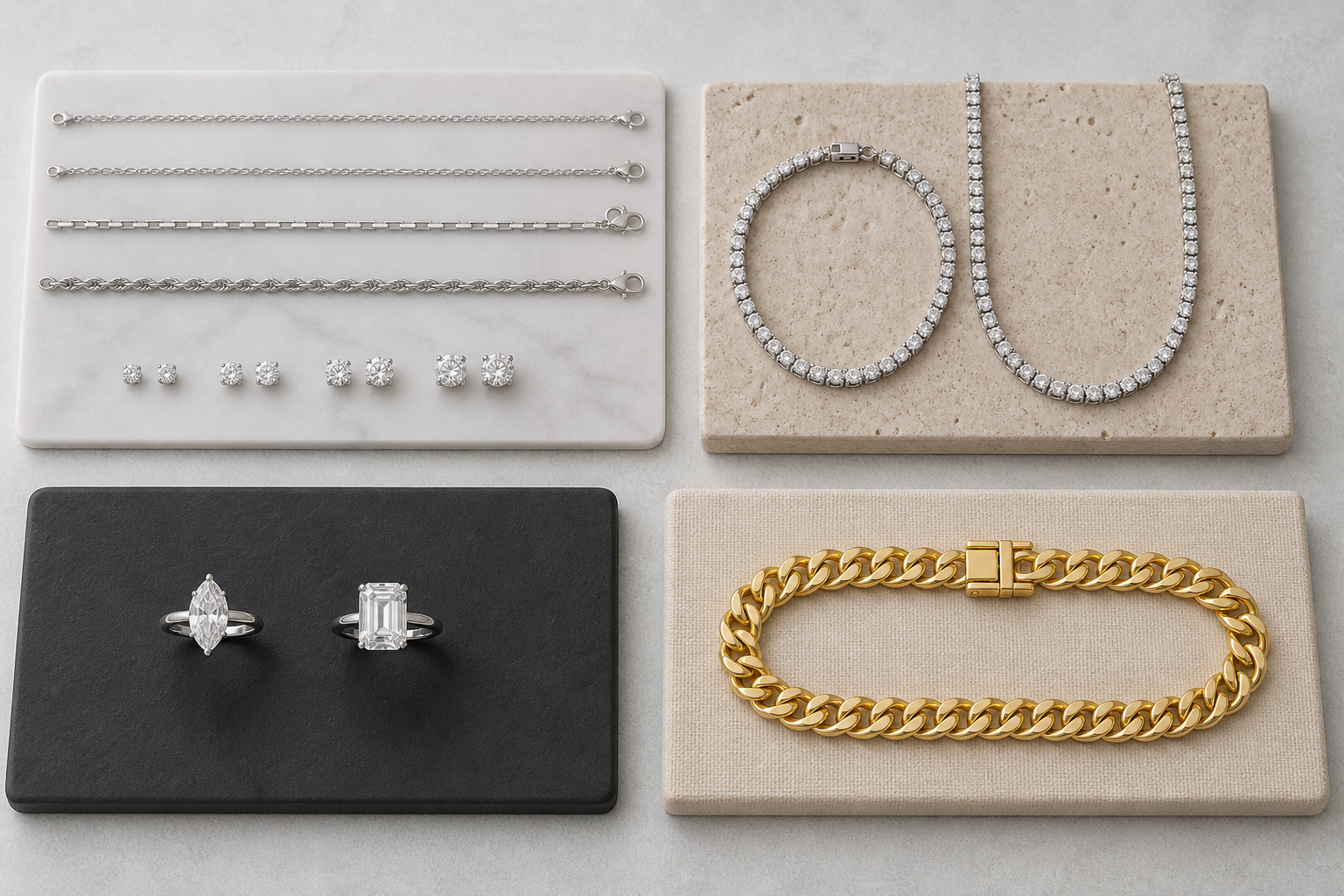
Review the same period across comparable SKUs. A ring size, chain length, metal color, or bracelet width can behave differently even when the parent style sells well. Parent-style demand is useful, but the reorder decision usually happens at the variant level.
Calculate Sell-Through Without Letting One Number Control the Buy
Sell-through rate estimates how much of the available inventory sold during a defined period:
Sell-through rate = units sold ÷ (units sold + ending sellable inventory) × 100
Example: a retailer sold 8 units and has 4 sellable units remaining. The period sell-through rate is 8 ÷ 12, or about 67%. This example is illustrative; the right action depends on lead time, margins, returns, seasonality, and whether the SKU is intended to stay continuously available.
Read sell-through in context
- A high rate on a core tennis bracelet may support replenishment because an out-of-stock would interrupt a proven offer.
- A high rate on a one-time promotion may not repeat after the campaign ends.
- A low rate on a premium 18K gold chain may be acceptable if the SKU is a display anchor or special-order reference.
- A low rate on a duplicated ring size or chain length may suggest shifting depth to a faster variant rather than abandoning the parent style.
Compare sell-through among items with similar price position, product type, launch date, and marketing exposure. A newly photographed product with strong placement is not directly comparable to an older SKU with weak images or an incomplete description.
Use Weeks of Supply to Estimate When Stock May Run Out
Weeks of supply estimates how long current inventory could last at the recent sales pace:
Weeks of supply = sellable units on hand ÷ average weekly unit sales
If a SKU has 6 units on hand and has averaged 2 units per week, it has approximately 3 weeks of supply. If the complete replenishment cycle takes longer than 3 weeks, the reorder review should happen immediately. If demand is rising, recent weekly sales may be more useful than a long historical average.
A zero-sales SKU needs a different review. Do not divide by zero or automatically reorder because inventory is low. Instead, check whether the product was available, visible, correctly priced, properly described, and supported by traffic. No sales can mean low demand, but it can also mean the item was never given a fair selling opportunity.
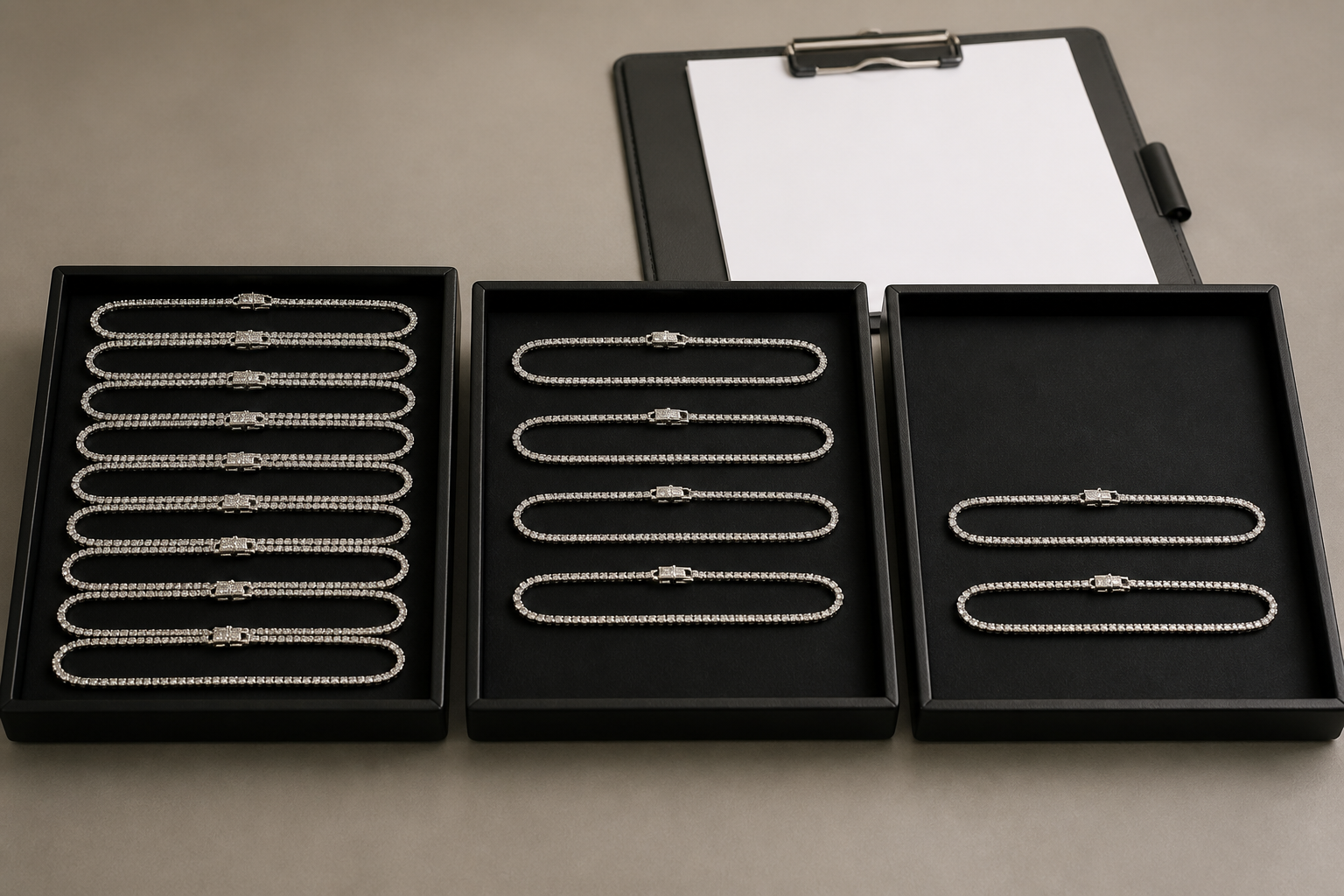
Build a Reorder Point That Includes Lead Time and Safety Stock
A simple planning formula is:
Reorder point = expected demand during lead time + safety stock
Expected lead-time demand can be estimated from average weekly sales multiplied by the number of weeks in the full replenishment cycle. Safety stock is a controlled buffer for demand changes, transit variation, receiving issues, or promotional spikes. It should be larger for reliable core items and smaller for unproven fashion tests.
Do not treat a supplier’s shipping estimate as the entire lead time. Add internal time for approval, payment, receiving, quality inspection, photography, SKU setup, and shelf or website activation. For online retailers, inventory is not truly ready to sell until the product page, images, variant data, and fulfillment location are correct.
Assign Every SKU a Clear Inventory Role
SKU roles prevent the same formula from being applied to everything.
| SKU role | Primary purpose | Reorder approach | Typical examples |
|---|---|---|---|
| Core | Consistent availability | Review frequently; protect size, length, or width continuity | Proven silver chains, classic tennis widths, staple moissanite studs |
| Traffic driver | Search, social, or promotion entry point | Coordinate stock with campaigns and landing pages | Featured tennis bracelet or giftable moissanite pendant |
| Seasonal | Holiday, bridal, or event demand | Buy to a defined selling window and exit plan | Gift sets, occasion-led displays, promotional assortments |
| Test | Measure demand before committing | Start narrow; reorder only after a clear signal | New stone shape, finish, chain profile, or ring style |
| Premium or display | Trade-up, credibility, or consultation | Review individually; consider special-order support | Higher-weight solid-gold chains or premium bridal references |
Apply the Framework by Jewelry Category
Tennis bracelets and tennis necklaces
Track widths, lengths, metal colors, clasp types, and setting profiles separately. Protect availability in the most productive core combinations, while using controlled depth for wider or more statement-led pieces. Review the wholesale tennis bracelet guide and wholesale tennis necklace guide before deciding which variants belong in the core group. Current assortments can be reviewed in Moissanite Tennis.
925 sterling silver chains
Monitor chain style, length, width, gram weight, finish, and clasp. A parent style may sell well while only a few length-width combinations drive most units. Reorder at the variant level and keep product data consistent so customers can compare accurately. See the 925 silver chain styles guide and the current 925 Silver Chains collection.
10K, 14K, and 18K solid-gold chains
Higher material value increases the importance of controlled depth. Track karat, construction, length, width, and weight rather than treating all gold chains as interchangeable. Use proven configurations as the core and evaluate heavier or premium pieces individually. For comparison points, read the solid-gold chain construction guide, the 14K vs. 18K inventory guide, and browse Solid Gold Chains.
925 silver moissanite jewelry
Measure demand by product type, stone shape and dimensions, setting, finish, ring size, earring back, bracelet length, and necklace length. Replenishment should protect matched-pair consistency for earrings and size continuity for rings, while avoiding unnecessary depth in every possible variation. Start with the 925 silver moissanite jewelry guide, then use the specialized earring and ring guides.
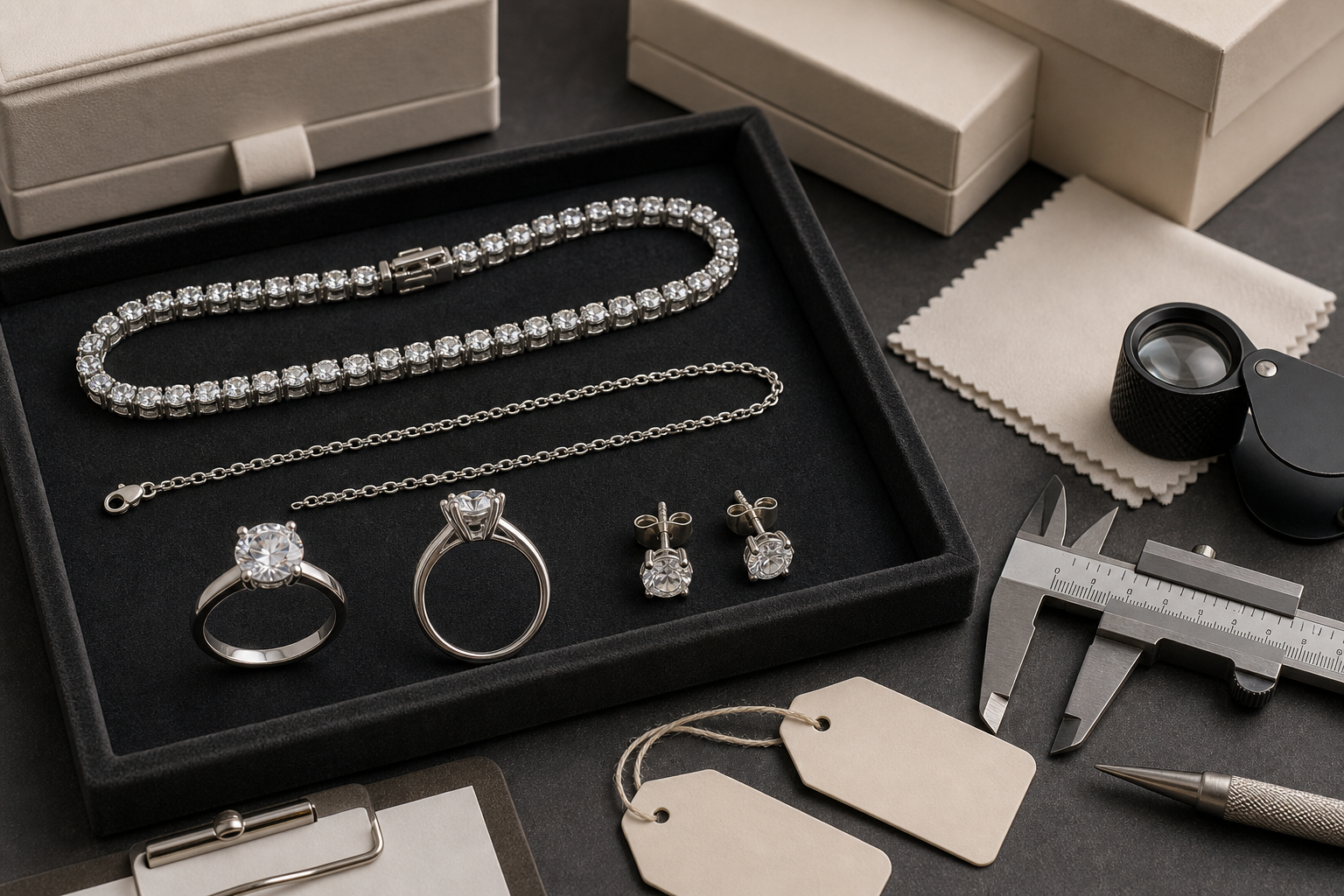
Inspect Reorders Before Merging Them Into Existing Stock
A replenishment unit should match the product information customers already saw. Before combining a reorder with existing inventory, compare:
- metal marking and declared material;
- stone dimensions, shape, setting, and visible color consistency;
- chain length, width, construction, weight range, and clasp function;
- ring size, shank profile, setting height, and matching-band fit where relevant;
- finish, plating color, polish, symmetry, and workmanship;
- packaging, labels, SKU mapping, and barcode accuracy.
Accurate descriptions matter. The U.S. Federal Trade Commission’s Jewelry Guides address representations about metals, gemstones, treatments, and other jewelry characteristics. Retailers should make material and gemstone disclosures accurate and consistent across supplier records, packaging, product pages, and sales conversations.
Use a Weekly Reorder Meeting With a Fixed Output
A short weekly process is more useful than a large review performed only after stockouts appear. The meeting should produce a decision for every flagged SKU:
- Reorder now: demand and weeks of supply justify action.
- Watch: keep the SKU on a defined review list until more evidence appears.
- Shift depth: move future units toward a stronger size, length, width, or metal variation.
- Improve presentation: repair photography, copy, navigation, or staff education before judging demand.
- Stop or special order: avoid automatic replenishment and preserve the option through consultation.
Document the reason, quantity, owner, order date, expected arrival, and next review date. This creates a record that can be compared with the actual result after the holiday, bridal, or promotional period.
Supplier Questions That Improve Reorder Decisions
- Which specifications define the item and its variants?
- What is the current processing and transit expectation?
- Can core styles be reordered consistently, or are they limited runs?
- How should receiving teams verify metal, dimensions, finish, and stone setting?
- Are product images, measurements, and variant details available for retail setup?
- Which items are available for current wholesale ordering?
- What opening-order, reorder, and account requirements apply?
LEKANI serves jewelry businesses worldwide, with products fulfilled from the U.S. or China warehouse shown on each product page. Review the Wholesale FAQ for current policies, or submit the Wholesale Account Application to discuss current availability and assortment needs.
Frequently Asked Questions
What is a jewelry reorder point?
A jewelry reorder point is the inventory level that triggers a replenishment review. A practical starting formula is expected demand during the full lead time plus a controlled safety-stock allowance. The final decision should also consider SKU role, seasonality, returns, and supplier consistency.
How often should a jewelry retailer review inventory?
Core and promoted SKUs should usually be reviewed more frequently than slow-moving, premium, or special-order items. Many retailers benefit from a weekly exception review and a broader monthly assortment review. The appropriate cadence depends on sales velocity and lead time.
What is the difference between sell-through and weeks of supply?
Sell-through describes how much available inventory sold during a defined period. Weeks of supply estimates how long current inventory may last at the recent sales pace. Used together, they show both performance and stockout risk.
Should every best-selling jewelry style be stocked deeply?
No. A parent style can be a bestseller while only certain sizes, lengths, widths, finishes, or metal options drive demand. Reorder depth should follow productive variants and the role of each SKU, not only the parent-style total.
How should new jewelry styles be reordered?
New styles should start with a defined test quantity, selling period, placement plan, and success measure. Reorder only after the retailer confirms that demand is repeatable and not caused solely by a short promotion or temporary placement.
When should holiday jewelry replenishment planning begin?
Planning should begin early enough to include supplier processing, transit, receiving, quality inspection, product-page setup, and merchandising. For many U.S. retailers, late summer and early fall are useful checkpoints for holiday readiness, with faster review cycles as November approaches.
Build a Reorder System Around Evidence, Not Guesswork
The strongest wholesale jewelry inventory plan is neither “buy more” nor “buy less.” It is a consistent system that protects proven core items, tests new ideas with controlled exposure, and gives premium pieces an intentional role. Start with clean variant data, calculate sell-through and weeks of supply, include the full lead time, and record every decision.
Ready to review your next assortment? Apply for a LEKANI wholesale account or contact the team through the website to discuss current tennis jewelry, chain, and 925 silver moissanite availability for your business.
Sources and further reading: National Retail Federation, August 2026 import outlook; JCK, K-shaped jewelry market and holiday outlook; JCK, second-half retail merchandising outlook; The Silver Institute, sterling silver information.


