
Jewelry Store Display Lighting for Moissanite: A Holiday Retail Guide
Improve moissanite jewelry displays with consistent color temperature, accurate metal rendering, controlled sparkle and an actionable holiday lighting test.
For jewelry retailers, display lighting should make a moissanite piece easier to evaluate—not simply brighter. The best setup keeps metal color believable, produces controlled sparkle, separates a focal style from supporting pieces and remains consistent enough that customers see a similar product online and in the case.
Quick answer: Use one consistent color-temperature family inside a display, choose high-fidelity light sources, layer focused accent light over softer fill light, control glare and hot spots, and test every setup from a shopper’s normal viewing position. Then photograph the same display with a repeatable lighting setup so the online and in-store experience tell the same story.
Why display lighting deserves a holiday reset
The National Retail Federation forecasts that U.S. retail sales during November and December 2026 will grow 4.2% over 2025 to approximately $1.013 trillion. That is a broad retail forecast—not a jewelry-category guarantee—but it supports preparing conversion details before peak gift traffic arrives.
During Thanksgiving week, Black Friday, Small Business Saturday, Cyber Monday and the early-December gift window, shoppers compare more styles in less time. Lighting affects how quickly they can read metal tone, stone pattern, scale and silhouette. A confusing display can make two useful products look interchangeable; a clear display helps each piece communicate its role.
Start with four retail lighting goals
- Accurate metal color. Rhodium-plated S925 should not look yellow because of an uncontrolled warm cast, while gold-plated silver should not lose its warmth under overly cool light.
- Controlled stone response. Moissanite should show brightness and fire without sharp glare that hides the setting or makes the piece difficult to inspect.
- Clear visual hierarchy. A focal necklace, core studs and fashion hoops should not receive identical emphasis if they serve different purchase missions.
- Consistency across channels. Product pages, social content and the physical case should present a recognizable color and scale story.
Color temperature: consistency before preference
There is no universal color-temperature number that is correct for every jewelry store. Display materials, ceiling height, daylight, wall color and the mix of silver-tone and gold-tone products all change the result. The practical rule is to avoid mixing several visibly different light colors on the same product.
GIA’s jewelry photography guidance recommends using a single color temperature and avoiding mixed sources such as daylight, fluorescent and incandescent light. The same principle is useful at retail: establish one repeatable case-lighting family, then use the store’s warmer or cooler ambient lighting outside the case for atmosphere.
For a mixed S925 assortment, begin with a neutral-looking display condition and test it against both rhodium-plated and gold-plated pieces. Look for a believable silver white, a natural gold tone and a neutral display form. If the form, metal and skin tone all shift strongly in one direction, shoppers are not seeing an accurate comparison.
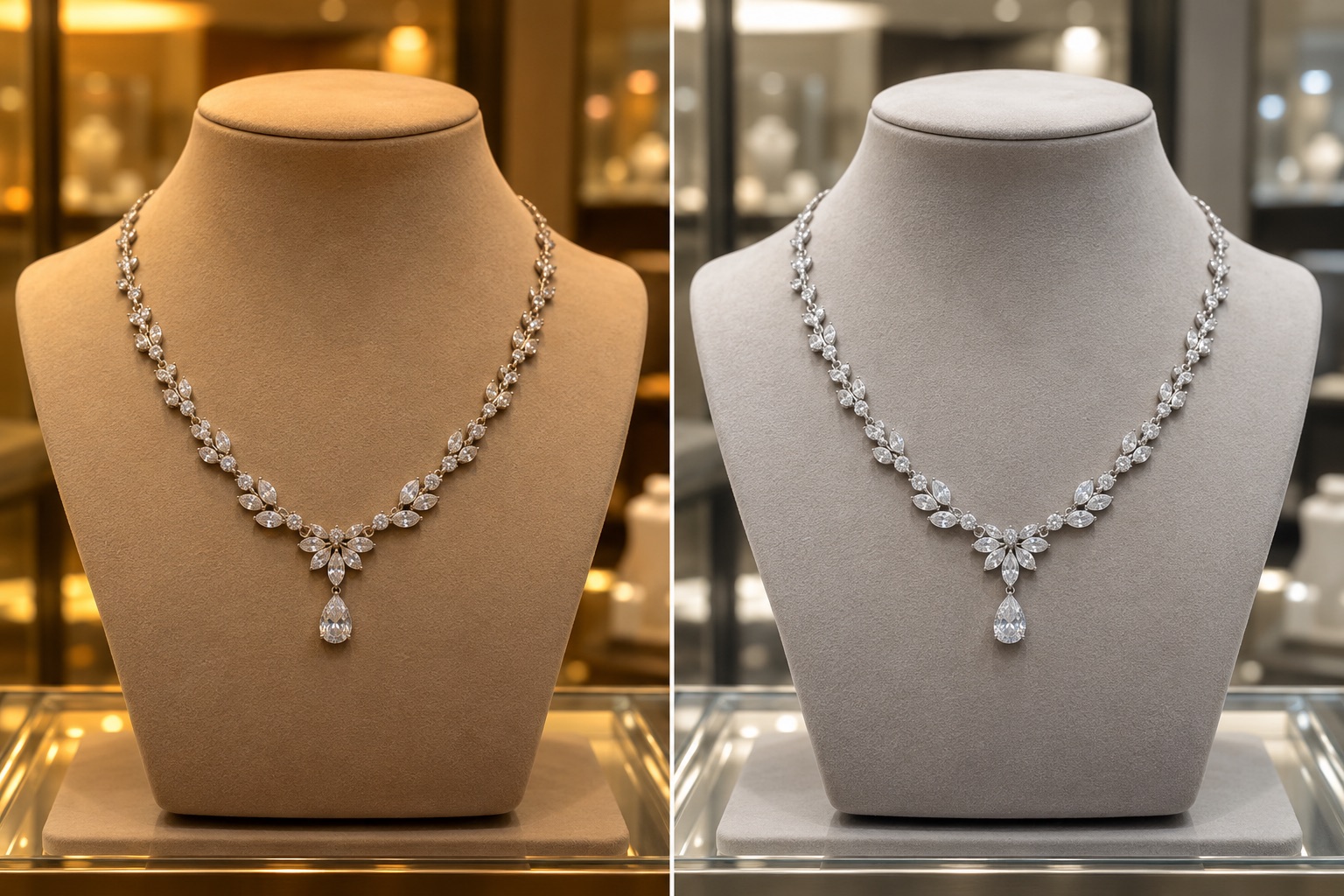
A five-minute color check
- Place one silver-tone and one gold-tone piece on the same neutral display form.
- View them from the customer side of the case, not only from above.
- Turn nearby decorative lights on and off to identify unwanted color mixing.
- Compare the display with an approved product image on a calibrated or familiar device.
- Repeat the check at daytime and evening operating conditions.
Choose color fidelity, not brightness alone
Brightness is easy to notice, but it is not a complete quality measure. The U.S. Department of Energy notes that small directional lamps are well suited to jewelry and other display applications because of their high color-rendering capability and tightly controlled beams. In practice, retailers should evaluate high-color-fidelity fixtures and the beam pattern together.
A fixture can have good color specifications and still fail if it creates harsh reflections, visible bright spots or dark gaps between products. Before replacing an entire system, test one display bay with the actual jewelry, stands and glass used in the store.
Build three lighting layers with separate jobs
A useful jewelry display combines three layers rather than asking one lamp to do everything:
- Focal accent: a controlled beam that guides attention to the hero piece or new arrival.
- Soft fill: broader light that keeps settings, clasps and side profiles readable without flattening the display.
- Ambient contrast: comfortable surrounding light that prevents the case from feeling like a bright box in a dark room.
Keep the focal-to-fill difference visible but moderate. If one piece is dramatically brighter, customers may assume the surrounding products are lower quality. If everything is equally bright, the display has no starting point.
Merchandise moissanite by viewing behavior
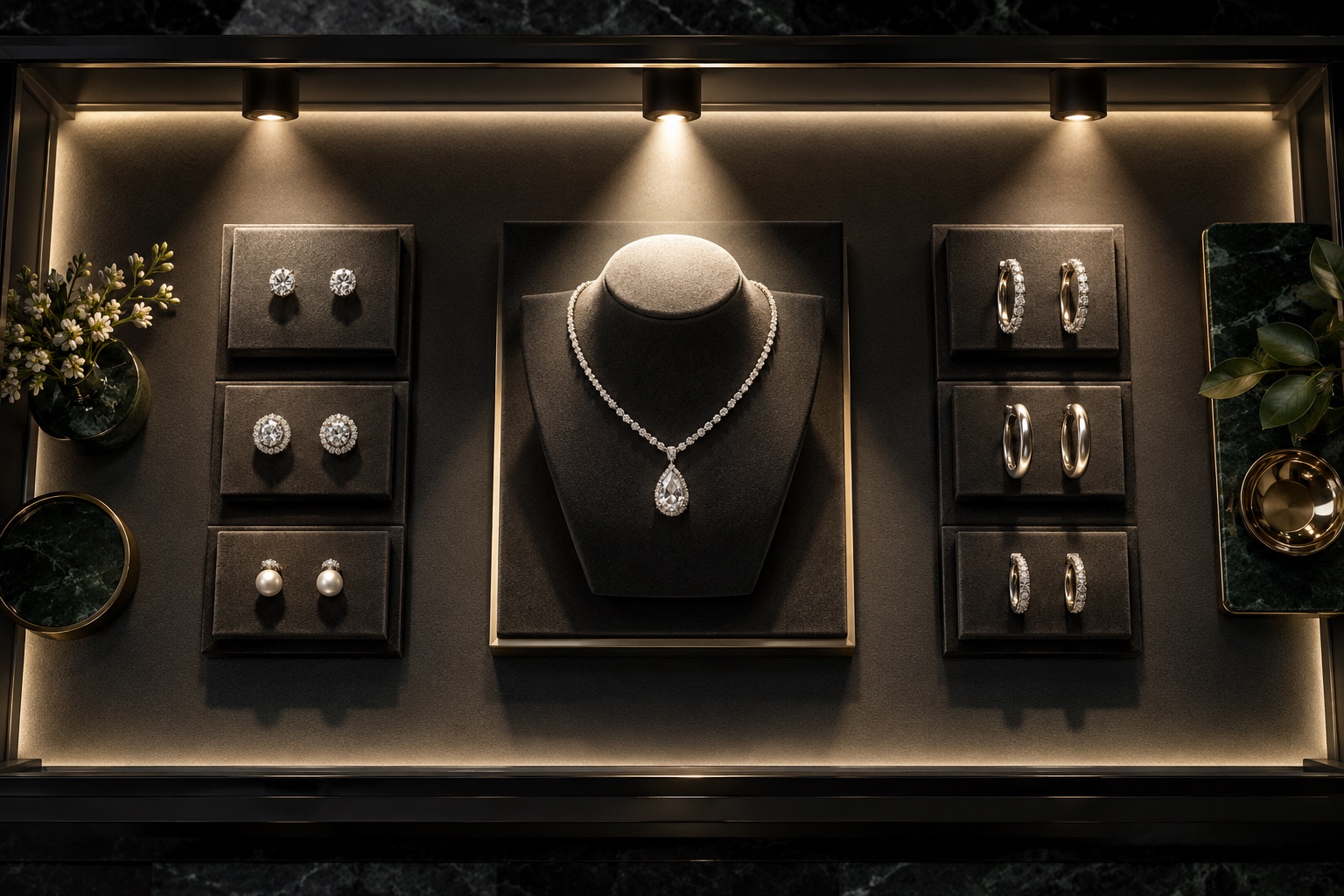
Different silhouettes need different viewing conditions. Small studs benefit from a clean front view and enough fill to reveal the halo or prong structure. Hoops need side visibility so customers can understand diameter, profile and closure. Necklaces require vertical presentation and enough distance between the chain and display surface to keep the silhouette legible.
LEKANI’s newly listed Three-Stone Bezel Moissanite Necklace in S925 Sterling Silver is a useful lighting test because its graduated bezel-set stones create three points of reflection along a fine chain. Check that the light reveals the asymmetric arrangement without losing the chain against the display form.
For a broader comparison, review current moissanite necklaces and moissanite earrings under the same conditions. The goal is not to make every item look identical; it is to make material, scale and construction easy to compare.
Control sparkle without creating glare
Moissanite’s fire can attract attention, but more direct light is not always better. GIA notes that diffused lighting can help reveal a gemstone’s color, while direct light can create hot spots in photography. Retail displays face a similar balance: use directional accents for movement and sparkle, then add softer fill so the setting and metal remain visible.
Test for glare from three places:
- Display glass: look for ceiling-light reflections that sit directly over the product.
- Polished metal: rotate pieces slightly so a mirror-like surface does not become a blank white highlight.
- Customer position: check seated, standing and side-angle views where possible.
Make the online image match the in-store promise
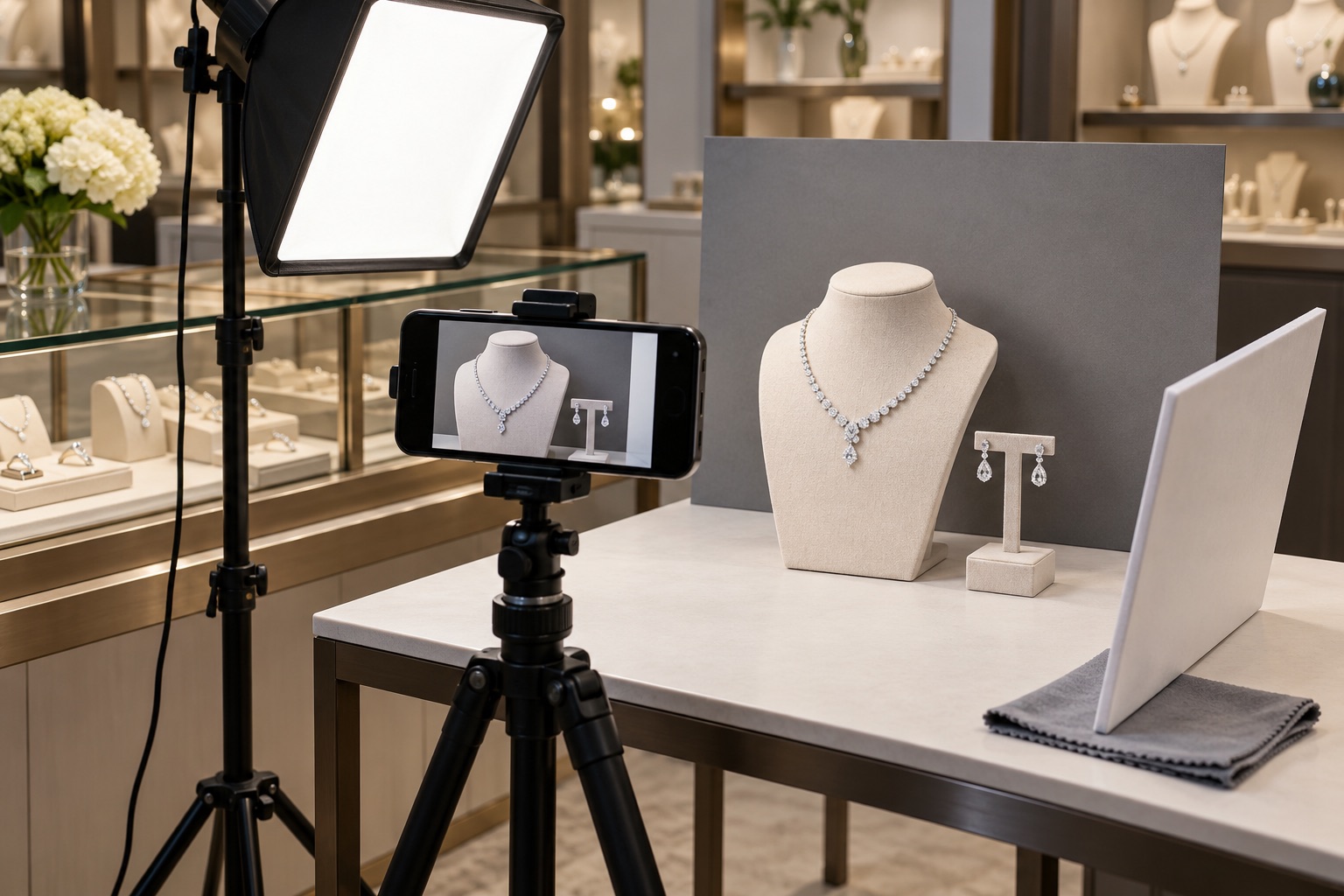
Lighting consistency should continue into product photography. A customer who sees a neutral silver-tone product online should not meet a heavily amber version in the case. Create a small repeatable photo station with one light family, a neutral background, stable phone or camera position and a simple reflector.
Capture the views that support a purchase decision: front, side, clasp or closure, scale, setting detail and a wearing view when available. Use descriptive alt text that explains the product and view instead of repeating a keyword list.
A seven-step holiday display test
- Select one hero style, one core style and one add-on from the planned holiday assortment.
- Place silver-tone and gold-tone items in the same test bay if both finishes will be sold nearby.
- Set a consistent color-temperature family and remove competing decorative light from the case.
- Add focal, fill and ambient layers one at a time so each change can be evaluated.
- Photograph the display from the shopper’s normal viewpoint and review it on a phone.
- Ask associates to explain the visual hierarchy: which piece should customers notice first, compare second and add third?
- Track questions, try-ons, product-page engagement and sell-through after the change.
Frequently asked questions
What color temperature is best for a jewelry store display?
No single number fits every store. Begin with one consistent, neutral-looking family inside the case, then test actual silver-tone and gold-tone pieces against your display materials and ambient light. Consistency and accurate comparison matter more than choosing a fashionable number.
Is high CRI enough for jewelry lighting?
No. High color fidelity is useful, but beam control, glare, diffusion, fixture placement and the surrounding environment also affect how a customer sees the jewelry. Test the complete setup with real products before a larger rollout.
Should moissanite use direct or diffused light?
Use both for different jobs. Controlled directional light can create movement and sparkle; softer fill helps customers see the setting, metal and construction without hot spots.
How should retailers light silver-tone and gold-tone jewelry together?
Use a consistent base condition and check both finishes side by side on a neutral form. If silver looks yellow or gold looks gray, adjust the case lighting or separate the finish stories instead of relying on mixed light.
How often should holiday jewelry lighting be reviewed?
Review it whenever the product mix, display forms, daylight exposure or promotional focal point changes. During peak season, a quick weekly check can catch shifted fixtures, burned-out lamps and displays that no longer match the priority inventory.
Prepare a clearer holiday moissanite presentation
Audit one display bay before changing the whole store. Use the result to create a repeatable standard for product placement, fixture angle, photography and associate training.
Shop All Moissanite Jewelry | Apply for a Wholesale Account
Availability note: The referenced product was published and available when reviewed on October 19, 2026. Confirm current availability, specifications and wholesale terms before planning promotions.
Sources: National Retail Federation 2026 holiday forecast; U.S. Department of Energy LED adoption report; GIA jewelry photography guidance.


