
Holiday Jewelry Return Policy Checklist for Retailers
Holiday sales do not end at checkout. Use this B2B checklist to make gift receipts, exchange rules, product condition standards and post-holiday service easier to understand and execute.
Holiday jewelry sales do not end at checkout. A clear, visible return and exchange policy helps shoppers buy gifts with confidence, gives store teams one consistent answer and makes the post-holiday service period easier to manage.
For a jewelry retailer, the policy should answer eight questions before a shopper pays: what dates apply, which items qualify, what proof of purchase is required, what condition is acceptable, which products have special rules, what remedy is available, who pays return shipping and how long processing takes.
The National Retail Federation forecasts that U.S. holiday retail sales in November and December 2026 will grow 4.2% year over year to $1.013 trillion, while noting that shoppers remain mindful of their budgets. The Plumb Club’s 2026 jewelry holiday outlook likewise describes a more selective consumer and identifies service touches—including special holiday return policies—as ways jewelry retailers can differentiate. A policy that is easy to understand is therefore part of the sales experience, not only a back-office document.
This article is an operational planning guide, not legal advice. Retailers should adapt their consumer policy to applicable federal, state and local requirements, payment-provider rules and their own business model.
The short answer: what should a holiday jewelry return policy include?
A practical holiday jewelry return policy should state:
- The purchase dates covered by the holiday window.
- The final date for requesting a return or exchange.
- Whether a receipt, gift receipt or order number is required.
- The condition, packaging, tags and documents that must accompany the item.
- Any category-specific rules for earrings, sized rings, engraved items, custom work, altered pieces, clearance products or final-sale merchandise.
- Whether the customer receives an exchange, store credit, refund or another remedy.
- How promotional pricing, bundle discounts and gifts with purchase are handled.
- The in-store and online steps, including return shipping and processing time.
Publish the policy before holiday promotions begin, then repeat the key terms on product pages, at checkout, on receipts and in customer-service scripts.
Why the policy needs to be ready before the holiday rush
Gift buyers frequently purchase for someone whose ring size, preferred finish or earring style they may not know. The buyer is evaluating two things at once: the jewelry and the risk of choosing incorrectly.
A clear exchange path can reduce that uncertainty. It also prevents an associate, a product page and a support email from giving three different answers. The goal is not to promise unlimited returns. The goal is to make the retailer’s actual rules visible, consistent and executable.
Prepare the policy early enough to train the team, update ecommerce templates, print gift receipts and test the post-holiday workflow before order volume increases.
Eight decisions to make before publishing the policy
| Decision | Questions for the retailer | What the customer should see |
|---|---|---|
| Holiday window | Which purchase dates qualify? When does the request period end? | Exact calendar dates, not “extended returns available.” |
| Proof of purchase | Is an original receipt, gift receipt or order number acceptable? | The documents or identifiers required. |
| Item condition | Must the piece be unworn, unaltered and in original packaging? | A plain-language condition standard. |
| Product exceptions | Are earrings, sized rings, personalized or custom items treated differently? | Each exception before purchase. |
| Remedy | Exchange, store credit, original-payment refund or a combination? | The available outcome and who receives it. |
| Return shipping | Who pays, and is authorization required first? | The approved process and address instructions. |
| Promotions | What happens to bundle savings, free gifts or discounted sets? | How the transaction will be recalculated. |
| Processing | Who inspects the return, and how long does the review take? | A realistic processing range without guaranteeing carrier or bank timing. |
Avoid vague phrases such as “easy returns” unless the detailed rules directly support that claim.
Set product-specific rules without surprising the buyer
Jewelry categories create different operational questions. Use category-level guidance where one rule does not fit every product.
Earrings: explain hygiene and try-on rules
If your store limits returns of pierced earrings for hygiene reasons, disclose that restriction before checkout and repeat it on the gift receipt. Define whether unopened packaging is required and whether an exchange is possible when the seal is intact.
Published product pages such as LEKANI’s Round Moissanite Halo Stud Earrings in S925 Sterling Silver and Pave Moissanite Hoop Earrings in S925 Sterling Silver illustrate why the exact style, post or closure and selected variant should appear on the receipt and internal inspection record.
Rings: separate fit exchanges from condition claims
Write down how the store handles an unworn size exchange, a resized item and a special-order size. Associates should confirm the selected size before completing a gift order and should never promise that every style can be resized.
When reviewing a moissanite ring assortment, make sure each SKU’s size options and any special-order status can be identified from the order record.
Necklaces and bracelets: document length, clasp and wear
Length is often part of the customer’s fit decision. Record the selected length and finish, then inspect the clasp and links before packaging. A published page such as the Three-Stone Bezel Moissanite Necklace in S925 Sterling Silver shows the type of product identity that should remain connected to the gift receipt and exchange record.
If the store sells multiple lengths or finishes, the policy should explain whether an exchange depends on availability and whether a price difference applies.
Build a gift receipt that supports the exchange workflow
A useful gift receipt can omit the selling price while still giving staff enough information to locate and verify the transaction.
Include:
- A unique order or gift-receipt reference.
- Purchase date and the applicable holiday deadline.
- Store name and contact route.
- Product SKU and selected variant in the retailer’s internal record.
- A short statement that the full policy and exclusions apply.
- A scannable or typed URL leading to the current policy.
Do not place sensitive payment details on the gift receipt. Decide in advance whether the gift recipient may receive store credit or exchange the item without access to the purchaser’s original payment method.
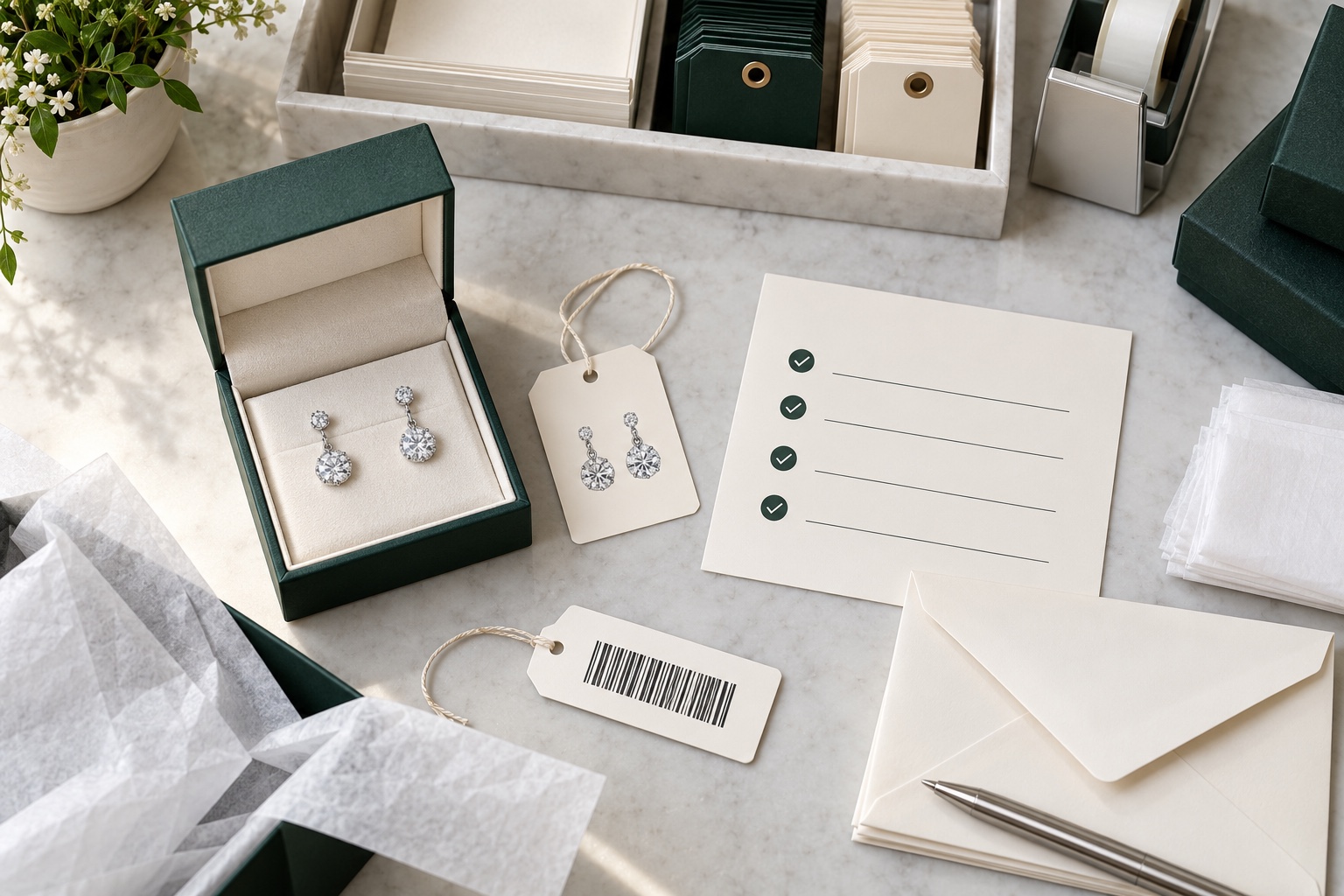
Inspect and document the jewelry before it becomes a gift
A consistent pre-sale check protects both the customer and the retailer. The associate should confirm the exact SKU and variant, then review the areas relevant to that product.
Use a short checklist:
- Match the item to the order, tag and gift receipt.
- Confirm the selected size, length and finish.
- Check visible stone settings, posts, backs, clasps and links.
- Note the condition of the piece and packaging.
- Include the correct box, pouch, care information and approved documents.
- Record who completed the check and when.
The record does not need to be complicated. It must be consistent enough that a different team member can understand the original sale during the post-holiday period.

Give associates a simple, accurate explanation
Train the team to explain the policy in one short conversation:
“This purchase qualifies for our holiday policy through [date]. Please keep the gift receipt, original packaging and tags. These are the exchange options for this item, and any product-specific exception is shown here.”
Then require the associate to point to the written terms. A spoken promise that conflicts with the published policy creates avoidable confusion.
For online orders, use the same language in product-page notes, cart messaging, the order confirmation and customer-service macros.
Place the policy where customers make decisions
Do not hide the holiday rules only in a footer page. Present the right level of detail at each stage:
- Product page: product-specific exception, size or hygiene rule.
- Cart: concise eligibility reminder and policy link.
- Checkout: acknowledgement when appropriate for the retailer’s process.
- Order confirmation: dates, documents to keep and contact route.
- Gift receipt: reference number, deadline and policy URL.
- Store counter: a visible summary supported by the full written policy.
Keep one source of truth. If the policy changes, update every customer-facing location and staff reference at the same time.
Prepare the post-holiday exchange desk
Create a defined intake-to-resolution workflow before December:
- Locate the transaction. Verify the receipt, gift receipt or order number.
- Confirm eligibility. Check dates, product category, exclusions and prior alterations.
- Inspect the item. Compare condition, packaging, tags and included materials with the policy.
- Record the result. Note the item, reason and approved resolution.
- Process the remedy. Follow the retailer’s exchange, credit or refund procedure.
- Return the item to the correct status. Do not put merchandise back into sellable inventory until inspection and any required cleaning, quality review or repackaging are complete.
- Review patterns. Repeated size, closure or description questions can reveal product-page or staff-training gaps.
Assign escalation rules for unclear cases so temporary staff do not improvise exceptions at the counter.

Coordinate the consumer policy with wholesale purchasing
Your store’s end-customer policy is separate from a supplier’s wholesale return terms. Before placing a seasonal order, review the supplier’s rules for discrepancies, non-defect returns, special orders and authorization requirements.
LEKANI wholesale buyers can review the Wholesale Return & RMA Policy, Shipping Policy and Wholesale FAQ. These policies apply to qualifying transactions with LEKANI; they do not replace the retailer’s own consumer-facing return policy.
A 30-minute holiday policy readiness check
Before your next promotion, confirm that:
- Exact dates are published everywhere customers see the policy.
- Gift-receipt fields and order lookup have been tested.
- Earrings, sized rings, custom work and final-sale items have explicit rules.
- Promotion and bundle adjustments are documented.
- Online and in-store language matches.
- Staff can explain the policy without inventing exceptions.
- Returned jewelry has a defined inspection and inventory-status process.
- Support contact details are current.
Frequently asked questions
Should a jewelry store extend its return window for holiday gifts?
An extended window can reduce gift-buyer uncertainty, but it should fit the retailer’s cash flow, product condition risks and inventory model. State the qualifying purchase dates and the final request date explicitly.
How should retailers handle gift receipts for jewelry?
Use a unique reference that lets staff locate the original transaction without displaying the price or sensitive payment information. Show the applicable deadline, contact route and full-policy URL.
Can earrings have different return rules?
They can when the retailer’s policy and applicable law permit it, but hygiene-related restrictions must be disclosed before purchase. Define whether unopened or sealed items are treated differently.
What should happen when a gifted ring is the wrong size?
Verify the receipt, condition and original size, then follow the store’s written size-exchange process. Resized, worn, engraved or special-order pieces may need separate rules that were disclosed at purchase.
Should the gift recipient receive a cash refund?
The retailer should decide and publish whether a recipient may receive an exchange or store credit and whether refunds can go only to the original payment method. Staff should not improvise this decision case by case.
Where should the holiday jewelry return policy appear?
Use a complete policy page plus concise, consistent reminders on relevant product pages, in the cart or checkout, in order confirmations, on gift receipts and at the store counter.
Plan the policy before the next wholesale order
A return policy works best when product data, staff training and purchasing records support it. Review variant details and packaging requirements before buying, then build the gift-receipt and inspection process around the products you plan to promote.
Create a LEKANI wholesale account to review eligible wholesale products, or contact LEKANI with product and order questions.


