
Engagement Season Ring Assortment Planning: Solitaire, Halo or Three-Stone?
A practical assortment framework for U.S. jewelry retailers preparing for proposal season: choose complementary moissanite ring silhouettes, plan size depth, improve comparisons and set reorder triggers.
Engagement season ring assortment planning should give shoppers meaningful choices without spreading inventory too thin. For most independent jewelry retailers and bridal boutiques, the most useful assortment combines a core solitaire, a halo option, a three-stone story and one or two distinctive pavé or band-led designs. The retailer should then decide size depth, display roles and reorder triggers for each style.
The timing matters. The Knot reports that about 47% of couples get engaged between November and February, with the period from Thanksgiving through Valentine’s Day widely recognized as engagement season. National Jeweler also notes that a customer researching a store in October may purchase in December. That makes early October an appropriate time to finalize ring comparisons, product pages, staff talking points and initial inventory depth.
Quick answer: What ring styles should retailers carry for engagement season?
A practical engagement-season assortment usually includes:
- A classic solitaire for shoppers who want a clear center-stone focus.
- A halo design for shoppers who want a larger visual footprint and added sparkle.
- A three-stone ring for shoppers drawn to symbolism and a more detailed profile.
- A pavé-shoulder or band-led option for shoppers who want brilliance across the finger.
- Coordinating bands or stackable styles when the retailer wants to support a future wedding-band purchase.
The goal is not to stock every variation. It is to create a comparison set that helps the customer recognize a preference quickly, then support the strongest styles with dependable size coverage.
Why proposal season requires a different inventory plan
Engagement rings are not purchased like ordinary fashion jewelry. The buyer may be working toward a specific proposal date, comparing several silhouettes and coordinating with a partner. Jewelers Mutual’s 2026 engagement ring research notes that ring shopping is increasingly shared, even though surprise proposals remain part of the market.
Retailers therefore need both visual choice and operational clarity:
- Enough silhouette variety to support comparison.
- Accurate size and material information.
- Clear expectations for availability and fulfillment.
- Consistent answers online and in store.
- A follow-up path for wedding bands, anniversary jewelry and care services.
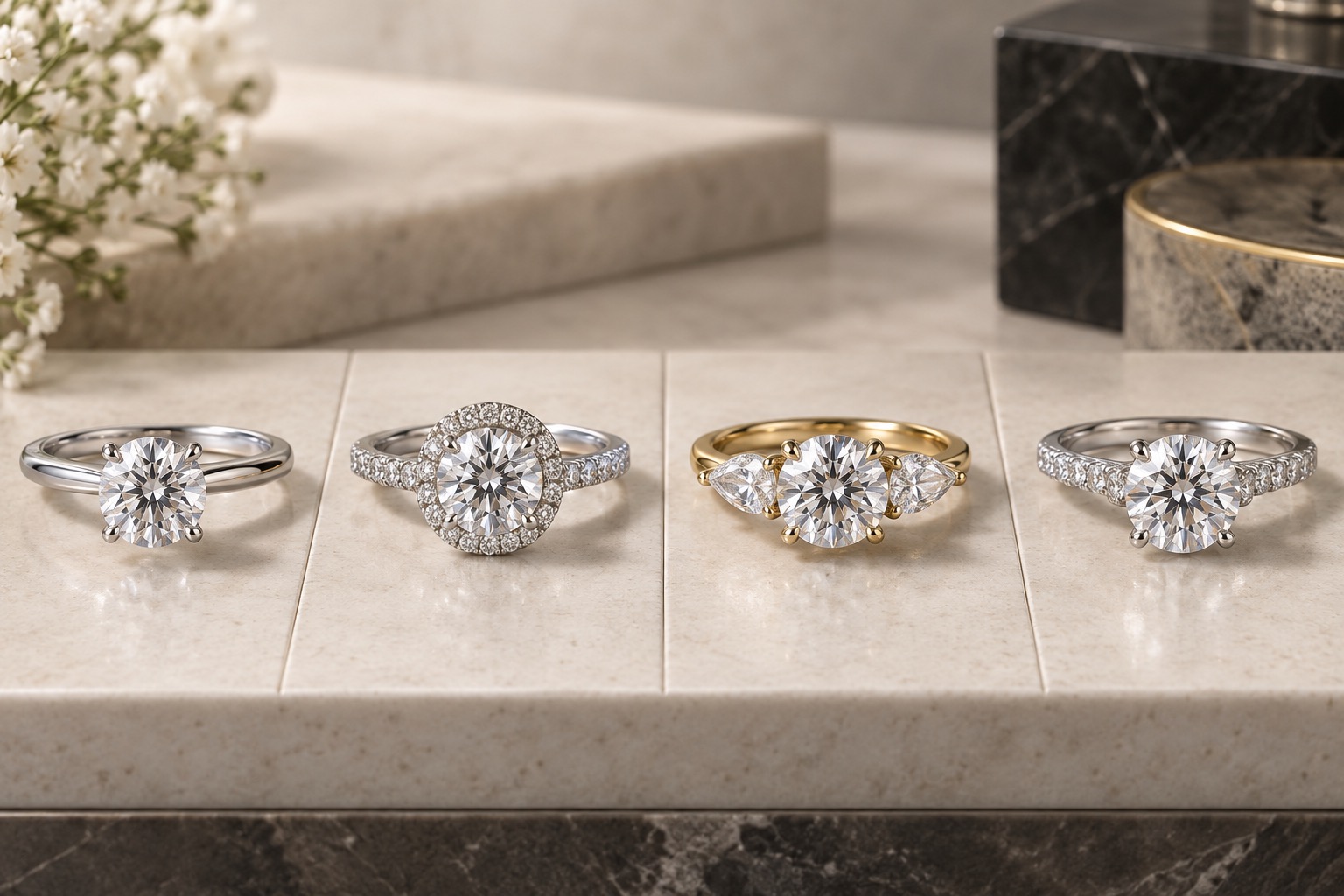
1. Use the solitaire as the core comparison style
A solitaire makes the center stone the primary visual decision. It gives sales associates a simple starting point for conversations about center-stone scale, prong profile, metal color and band width.
LEKANI’s Six-Prong Moissanite Solitaire Ring in Gold-Plated S925 Silver provides a current example of this role. The published product uses a round white moissanite in an open six-prong setting over a slender polished band, with yellow-gold plating over S925 sterling silver. The product page lists 1 ct and 5 ct center-stone options and U.S. ring sizes by variant.
For assortment planning, use the solitaire to answer:
- Does the shopper prefer a clean or detailed setting?
- Is warm or silver-white metal color more appealing?
- How much center-stone presence feels appropriate?
- Is a low-profile or more elevated setting preferable for daily wear?
Do not assume the largest center-stone option should receive the most inventory. Base depth on local demand, try-on feedback and actual sell-through.
2. Add a halo for visual impact
A halo surrounds the center stone with smaller stones, creating a broader face-up look and more visible sparkle. It works as a direct contrast to the cleaner solitaire.
The Round Moissanite Halo Ring in S925 Sterling Silver is a verified silver-rhodium example in LEKANI’s current assortment. Presenting a halo next to a solitaire allows the customer to compare two different value stories: concentrated center-stone simplicity versus a more detailed, light-catching frame.
When deciding halo depth, review:
- Whether the store’s customer favors classic or high-sparkle styling.
- The proportion of online versus appointment-based sales.
- Return or exchange patterns related to ring height and visual scale.
- Whether photography clearly shows the halo, shoulders and side profile.
3. Use three-stone rings to create a storytelling option
Three-stone designs provide a clear narrative and a visually balanced alternative to the solitaire and halo. They can appeal to shoppers who want more detail around the center without a full surrounding frame.
LEKANI’s Together Three-Stone Moissanite Ring in S925 Sterling Silver combines a round center with pear-shaped side stones and smaller stones along the shoulders. The currently published product is offered in silver-rhodium S925 and lists U.S. sizes 5–9.
For retailers, three-stone styles are useful as a mid-assortment comparison piece. The associate can explain shape balance, side-stone coverage and symbolism without presenting the ring as automatically “better” than a solitaire or halo.
4. Add a pavé-shoulder option for across-the-finger brilliance
Some shoppers want the center stone to remain defined while also seeing sparkle along the band. A pavé-shoulder design fills that role.
The Round Moissanite Pavé-Shoulder Ring in S925 Sterling Silver uses a round white moissanite center with slender stone-set shoulders and a raised prong setting. It creates a useful comparison with a plain-band solitaire.
Before increasing depth in pavé styles, confirm that product pages show the shoulder stones and side profile clearly. Retail staff should also be prepared to explain routine care and setting inspections without making unsupported durability claims.
Build a core-and-test assortment instead of equal depth
Equal quantities across every style can lock too much inventory into slower silhouettes. A better approach separates the assortment into two groups.
Core styles
Core styles earn deeper size coverage because they have the strongest local sales evidence, broadest appeal or most reliable replenishment path. For many stores, the core may begin with one solitaire and one halo or pavé-shoulder style.
Test styles
Test styles are displayed and marketed, but initially held in shallower quantities. A three-stone design, distinctive band or less familiar finish can begin as a test until try-on, inquiry and conversion data justify more depth.
A retailer can evaluate each style using five questions:
- How often do shoppers ask to try it on?
- Which sizes convert rather than only attract attention?
- Does the style produce online questions that the product page should answer?
- Can the item be replenished before the next proposal peak?
- Does it create a future wedding-band or anniversary opportunity?
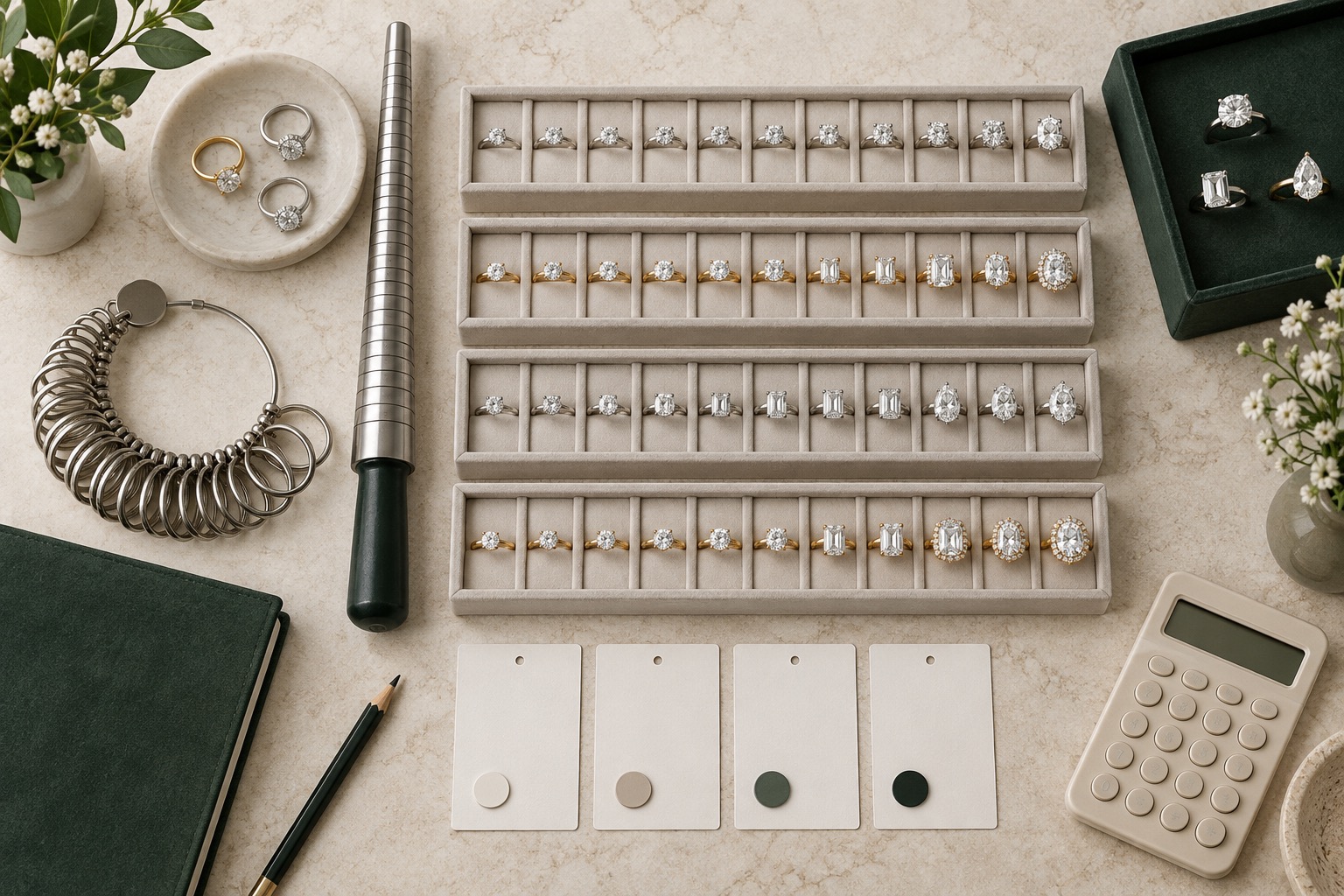
Plan ring sizes at the variant level
Total units do not reveal whether the assortment is ready. One style with several units in a single size may still lose sales.
Use a size-curve worksheet for every core style:
- List each offered size as a separate variant.
- Record on-hand quantity and open purchase orders.
- Mark the store’s historically strongest sizes.
- Set a minimum presentation quantity and reorder point.
- Track special-order requests separately from immediate sales.
Avoid publishing a size as ready to ship if current inventory does not support that claim. When the desired size is unavailable, communicate the verified fulfillment option instead of suggesting an unconfirmed lead time.
Merchandise the comparison, not just the individual ring
Customers often understand differences faster when rings are presented together. Create a comparison tray or online module with consistent photography and the same information order.
Show or state:
- Setting type: solitaire, halo, three-stone or pavé shoulder.
- Metal and finish.
- Center-stone shape and available options.
- Side profile and setting height.
- Ring sizes currently offered.
- What is included with the item.
- Care and return information.
Use the broader Wholesale Moissanite Rings Buying Guide for material, sizing and product-page considerations. This engagement-season article serves a different purpose: it helps retailers turn those fundamentals into a focused seasonal assortment.
Train associates with neutral comparison language
The strongest sales conversation helps the shopper identify a preference instead of ranking every ring on one scale. Useful prompts include:
- “Would you like the center stone to stand alone or have a surrounding frame?”
- “Do you prefer detail beside the center stone or a polished band?”
- “Is the ring being chosen together, or are we helping with a surprise proposal?”
- “Is there a date by which the correct size must be ready?”
Document the answers in the store’s customer record when consent and normal business practices allow. That information can support appointment follow-up and a later wedding-band conversation.
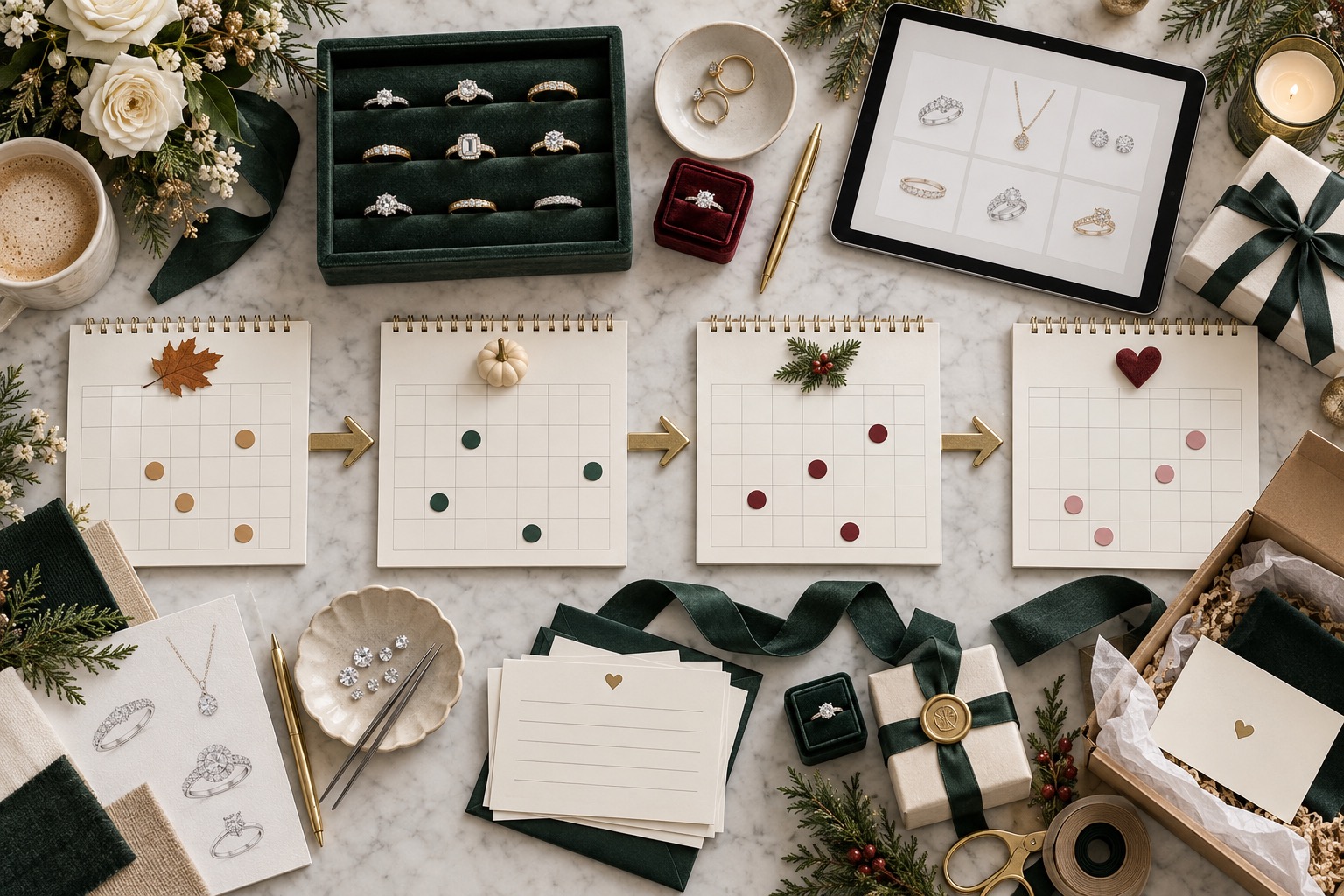
Use a six-week engagement-season action plan
October 8–18: finalize the comparison set
Choose the core solitaire, halo, three-stone and pavé options. Audit sizes, product facts, images and internal links.
October 19–November 1: build discovery content
Publish comparison photography, setting explanations, FAQs and appointment calls to action. Make material and size information easy for search engines and AI assistants to extract.
November 2–15: train and test
Review associate talking points, test mobile product pages and verify that inquiries route to the correct team. Monitor which styles receive saves, clicks and questions.
November 16 onward: protect availability
Track core sizes frequently, reorder against actual sell-through and state fulfillment timing accurately as Thanksgiving, Christmas and New Year proposal dates approach.
Measure the assortment after the season begins
Evaluate more than unit sales. Useful metrics include:
- Try-ons or product-page views by silhouette.
- Conversion rate by style and size.
- Time from first inquiry to purchase.
- Out-of-stock requests by size.
- Return or exchange reason.
- Full-price attachment of bands or complementary jewelry.
- Reorder lead time and lost-sale notes.
These signals help distinguish a style that attracts attention from one that deserves deeper inventory.
Build your engagement-season assortment with verified product data
LEKANI JEWELRY serves jewelry stores, bridal boutiques, online retailers, distributors and resellers worldwide. Explore the current wholesale moissanite rings collection, review the wholesale FAQ and confirm variant availability before committing to a seasonal size curve.
Ready to evaluate styles for your store? Apply for a wholesale account and compare verified ring options against your customer profile, price architecture and proposal-season calendar.
Frequently asked questions
When does engagement season begin in the United States?
Engagement season is generally considered the period from Thanksgiving through Valentine’s Day. Retailers should prepare content, staff and core ring sizes in October so shoppers researching before the holidays can find complete information.
Which engagement ring style should a retailer stock most deeply?
There is no universal answer. Use the store’s sales history, size demand, try-on data, customer profile and replenishment reliability. A broadly appealing solitaire is often a useful core style, but the local evidence should determine depth.
What is the difference between solitaire, halo and three-stone rings?
A solitaire focuses attention on one center stone. A halo frames the center with smaller stones for a broader sparkling appearance. A three-stone design balances the center with two prominent side stones and offers a more narrative look.
How many ring sizes should a retailer carry?
Carry the sizes supported by verified local demand and replenishment capacity. Track each size as a separate variant, identify core sizes and define when to reorder. Do not treat total product quantity as adequate size coverage.
How can online retailers reduce engagement ring returns?
Provide accurate sizing guidance, multiple angles, side-profile images, material and finish details, stone options, fulfillment expectations and a clearly stated return policy. Avoid implying fit, durability or delivery timing that has not been verified.


