
Tennis, Paperclip or Motif? A Bracelet Display Guide for Retailers
Compare three different S925 moissanite bracelet designs by visual focus, chain structure and the questions they help customers answer.

A useful bracelet display makes differences easy to see. Place a repeated line of stones, an elongated-link chain and a recognizable central motif side by side, then explain what changes between them. These are three merchandising roles to test with your customers—not a claim that one design sells best everywhere.
Tennis: make the repeated stone pattern easy to read
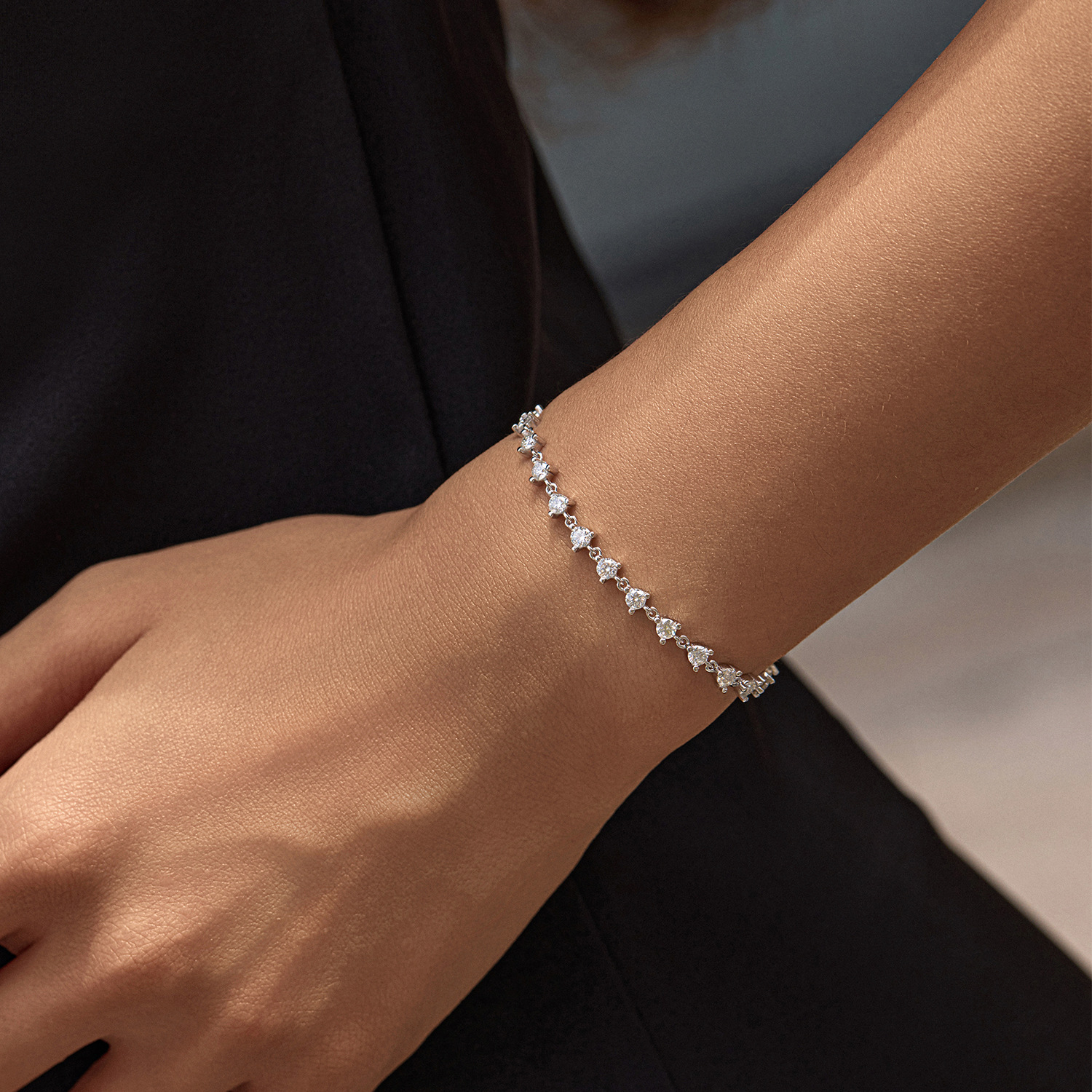
The round-stone tennis bracelet repeats stone-set elements around the design. In this example, the linked settings create a continuous visual rhythm rather than one isolated centerpiece. Use it to start a conversation with shoppers who want stones to remain a visible part of the overall bracelet.
Display test: open the bracelet into a gentle curve so the repeated elements are visible. Add a separate worn view for context. A photograph is not a measurement chart, so do not infer the customer’s fit from the model’s wrist.
Paperclip chain: let the links and central setting do different jobs
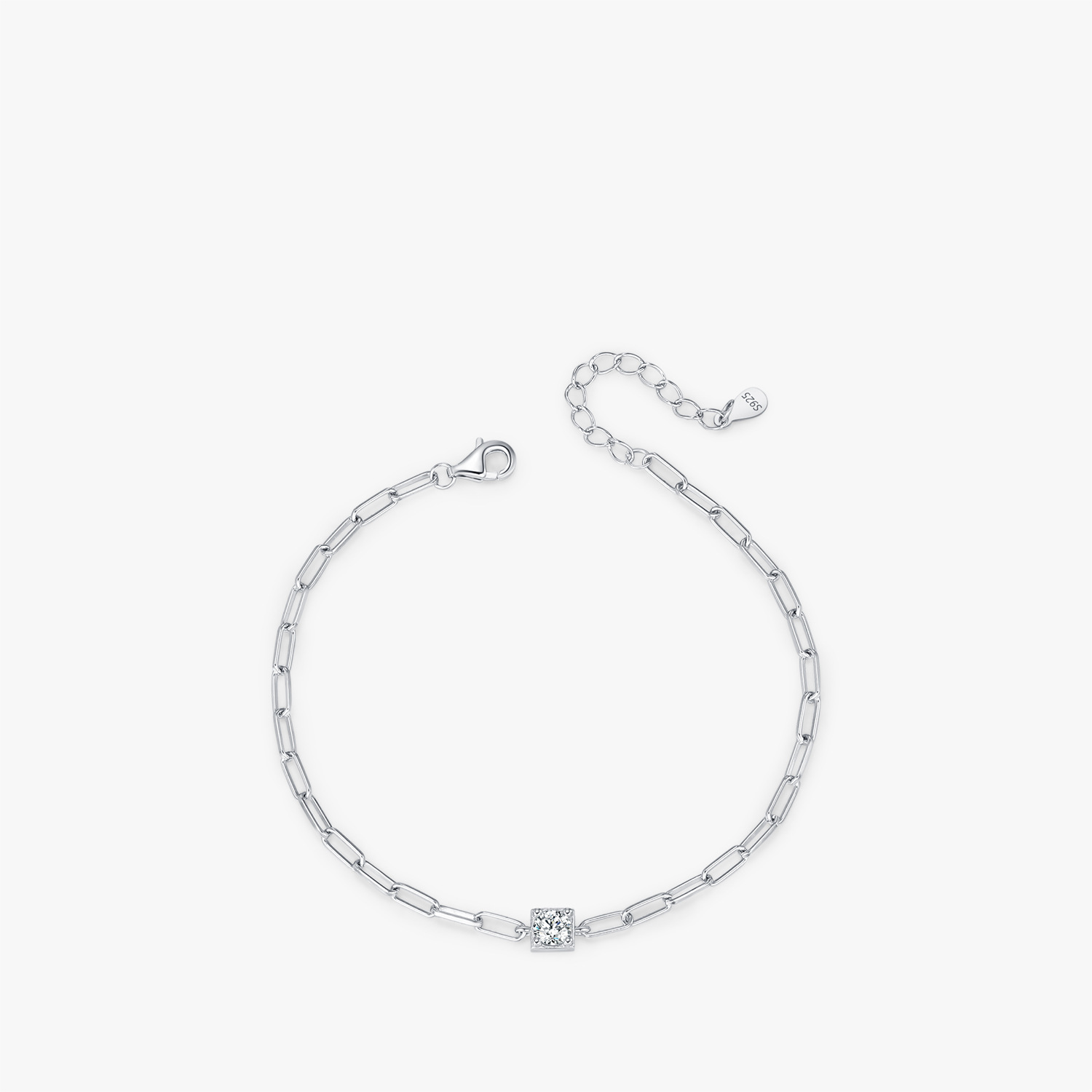
The paperclip-chain solitaire bracelet contrasts elongated links with a central moissanite setting. Showing the chain clearly is as important as showing the stone: a tightly cropped centerpiece photograph would hide the main difference from the tennis design.
Display test: leave enough space around the chain to show its link shape. Label the central setting and the chain separately. Avoid describing it as an all-over stone bracelet or assuming that an extension chain provides a particular adjustment range.
Open circle: give the motif a clear outline
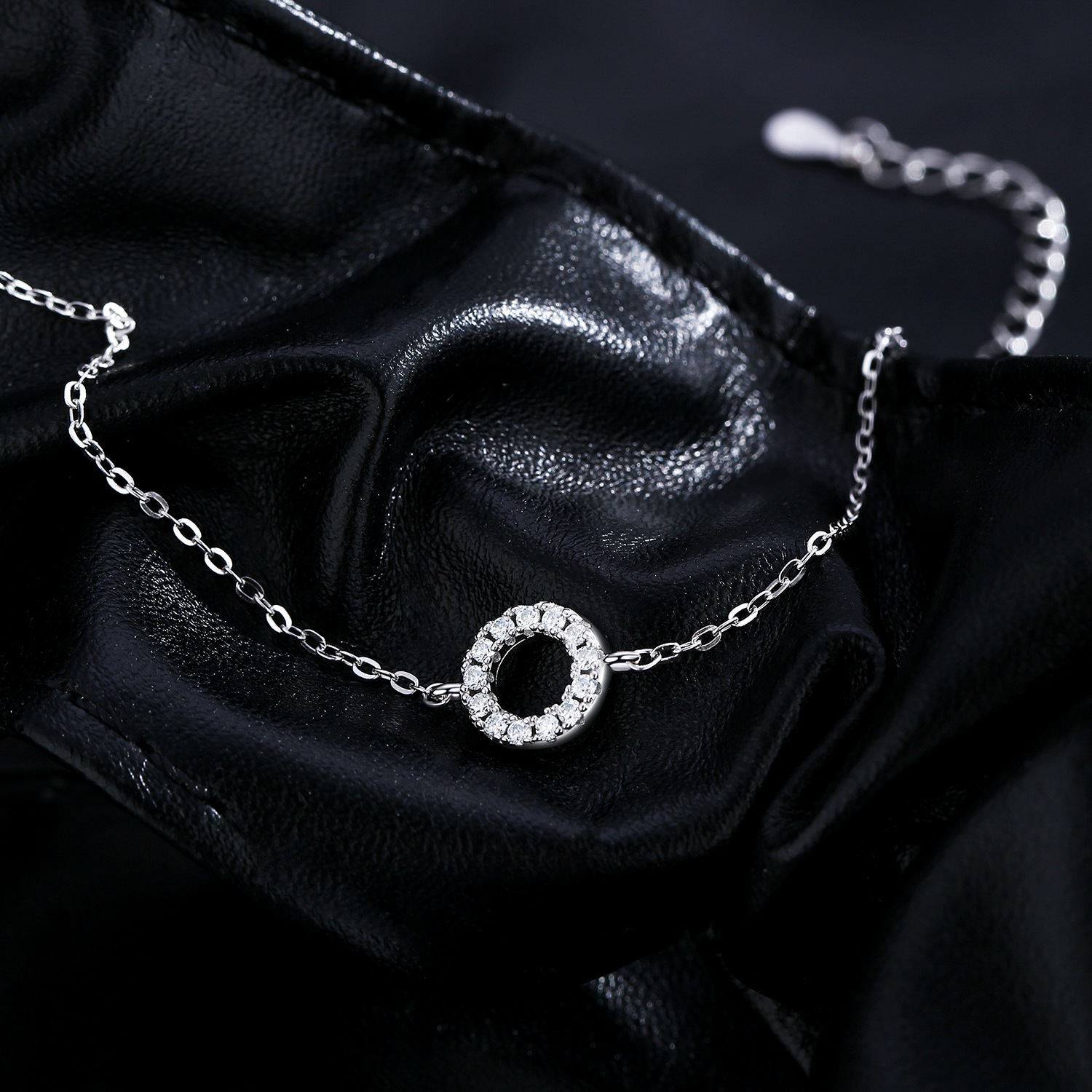
The open-circle bracelet places a recognizable geometric motif between finer chain sections. The empty center is part of the design. In the photograph, a dark background separates the circle from its surroundings; use this as a presentation idea, not as a promise that the same background suits every finish.
Display test: keep the center of the circle visible instead of overlapping it with a label or another bracelet. If you propose a layered look, show each product separately as well, and explain whether the items are sold individually.
Build the comparison around customer questions
Keep the comparison specific to the three pictured products. “Tennis,” “paperclip” and “motif” describe design features, not guaranteed quality grades, price levels or customer demand.
| Customer question | Design to show first | What to point out |
|---|---|---|
| Do you want a repeated stone pattern? | Round-stone tennis | The linked sequence of stone-set elements |
| Do you want the chain itself to be prominent? | Paperclip-chain solitaire | Elongated links and one central setting |
| Do you want a recognizable centerpiece? | Open-circle motif | The outlined circle and finer chain sections |
Test the display without confusing attention with demand
Give each style a comparable opportunity to be seen. Keep labels readable and use the same lighting setup when comparing product photographs. Change one presentation element at a time so you know what you tested.
- Record which design customers ask to see, not only which one they notice first.
- Separate design preference from a request for another length, finish or price point.
- Review inquiries, try-ons and actual purchases separately; do not turn a few interactions into a sales forecast.
Check the product, not just the styling label
All three linked examples are listed as S925 sterling silver with moissanite. Their currently listed selectable color is Silver. That does not establish identical stone sizes, lengths, clasp details or finish specifications. Verify those details for the exact SKU before preparing a customer-facing description or purchase.
- Confirm the selected SKU, current availability and the unit supplied. A styling photograph does not automatically mean a set.
- Request or verify the usable length, clasp operation and any adjustment range before advising on fit.
- Keep base metal, surface finish and stone descriptions separate. Do not add an unverified certificate, water-resistance claim or skin-sensitivity guarantee.
- Pass on the appropriate cleaning and storage guidance with the sale.
Prices are visible after registration and sign-in. For a first order, each warehouse merchandise subtotal must reach US$99 after discounts, excluding shipping and taxes. Qualified repeat customers have no minimum. Quantity tiers apply to the same SKU; different bracelet designs do not combine to reach a SKU’s 4+ unit tier. Confirm each product’s warehouse and destination-specific shipping information before promising a delivery date.
Quick buyer questions
Should I call every bracelet with a chain a tennis bracelet?
No. Describe what the pictured design actually shows. Here, the paperclip bracelet has elongated links and a central setting; the tennis example repeats stone-set elements.
Does the photograph show the exact fit on every customer?
No. Check the listed or confirmed measurements and the customer’s fit requirements separately.
Must the three designs be stocked in equal quantities?
No. The display comparison is a way to explain design choices, not a stock-ratio recommendation. Let your own demand records guide quantities.


